 Rui Carmo
Last year I had a go at doing predictions for 2025. This year I’m going to take another crack at it—but a bit earlier, to get the holiday break started and move on to actually relaxing and building fun stuff.
So let’s see how I fared last year at this prophesying stuff and what I think is going to happen next year:
AI, Industry and Agentic
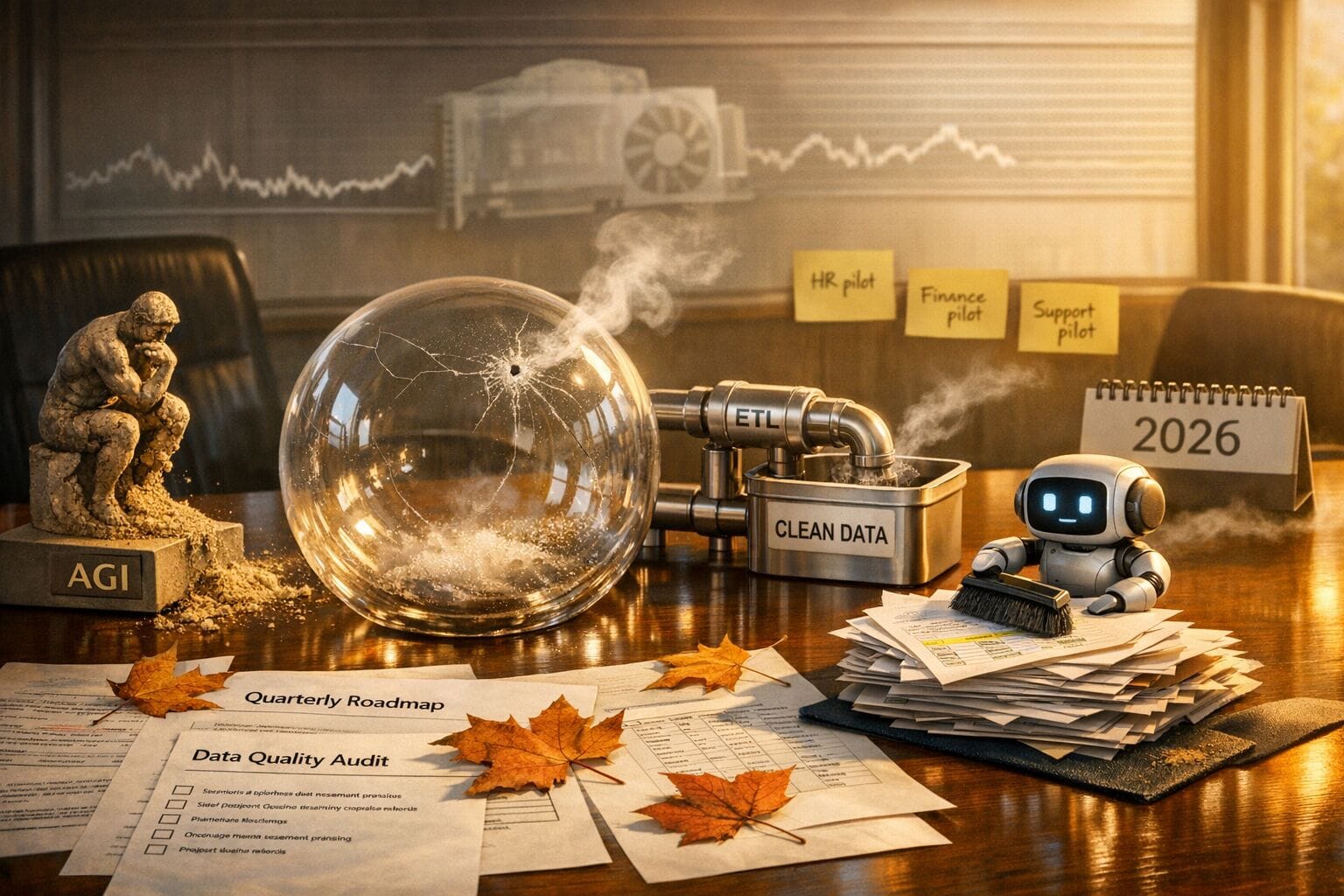
Guess what, 2025 wasn’t the start of a second AI winter after all.
But it might herald a slow, quiet AI autumn, and we are quite likely to witness a slow bubble burst next year as companies that rely solely on AI become obviously untenable (and OpenAI is quite well placed in that regard). But I did see that as inference costs decreased (artificially or not), AI became ubiquitous in the enterprise for just about anything.
So I missed that one. But I’d rather wager we’ll see a couple of major (if slow) implosions and a readjustment of the stock market than keep feeding the fantasy that LLMs will solve everything.
Diminishing returns take a while to kick in, even if things are “improving” in terms of model capabilities and the “agentic” approaches have mutated into variations of the “big data” playbook: clean up your data first, and your agents will work more reliably.
We still haven’t found the next new thing here, but at least the industry can’t deny we’re heading down a blind alley anymore.
So I’ll stick to the bit where I said:
I’m not even going to go there other than to say the hype-to-reality gap will, eventually, result in a cooling period for AI. My money’s on this year, but considering how long crypto hung around, the bubble might only deflate (with a whimper rather than a bang) in 2026.
Ethics and Law
Given that the US seems to have devolved into a sort of Wild West regarding AI legislation, I’m going to skip this one for 2026.
I was also wrong when I said:
I fully expect 2025 to be the year where I refuse to work on a project due to ethical concerns, and I suspect I will not be the only one.
People have been remarkably sane regarding practical applications of AI, and I’ve stopped seeing creepy HR evaluation agents and stuff. Plus I’ve actually been involved in a lot of discussions about responsible AI and accountability for its use.
Apple
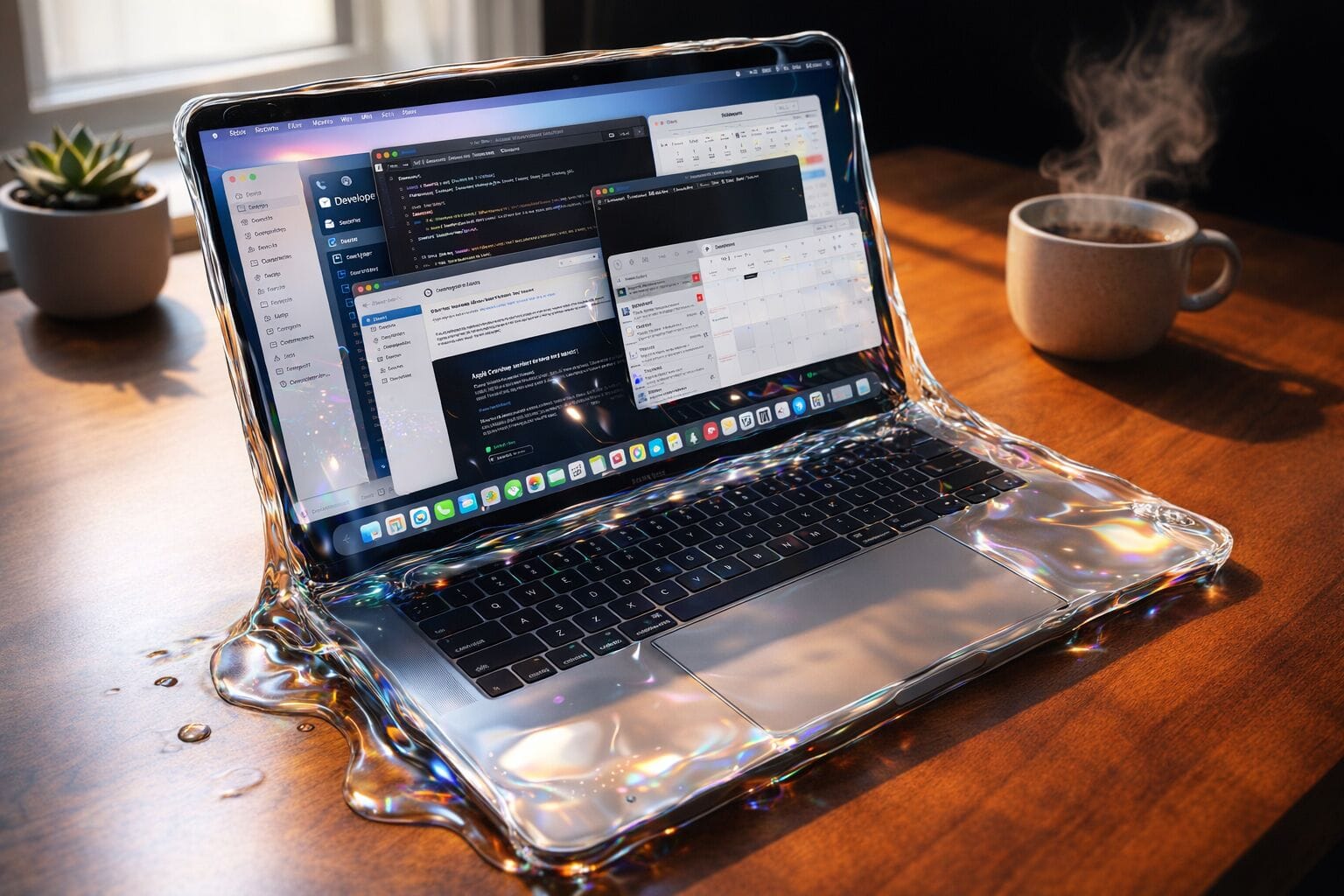
I opened this section last year with this doozy:
Apple Intelligence, despite Apple’s clever marketing, will remain plainly distinguishable from useful AI.
Nailed it.
There is now solid evidence that Siri is going to be powered by Gemini by WWDC 2026 (thus “improving”), and rumors of a “HomePod with a screen” are thick on the ground. So I’m going to claim that last one as correct but mistimed.
What I didn’t expect at all were:
- The M5 not making it to the Studio range (or, in fact, the lack of any substantial Studio upgrades)
- The Liquid Glass nightmare–which might be “fixed” now that Apple leadership is undergoing a bit of churn and we’re getting actual UI designers steering the company back from the brink of the bad taste abyss.
And of course my usual gripe panned out, as reliable and recurring as taxes:
Apple will still not allow you to run your own applications on iOS devices for more than a few days without the Developer Program or its kill switches.
For 2026, I am willing to wager that:
- Apple gets its software QA under control (if not effectively, at least to the point where the next OS releases won’t be nightmare-inducing)
- The UX guidelines get toned down heavily into something sensible
- We get new minis (Mac and, hopefully, iPad)
- We don’t get decent-sized iPhones (the foldable is pretty much certain, but not something you can use with one hand)
- Apple will start treating the EU as a second-tier market—not just by still withholding features like iPhone mirroring, but actively removing existing ones.
- Gemini, sorry, Siri will make a shy debut because Apple isn’t willing to rely on AI for anything, and they are fully aware of how badly their previous attempts failed.
- I still won’t have an iPad able to run VS Code natively.
Other Computing
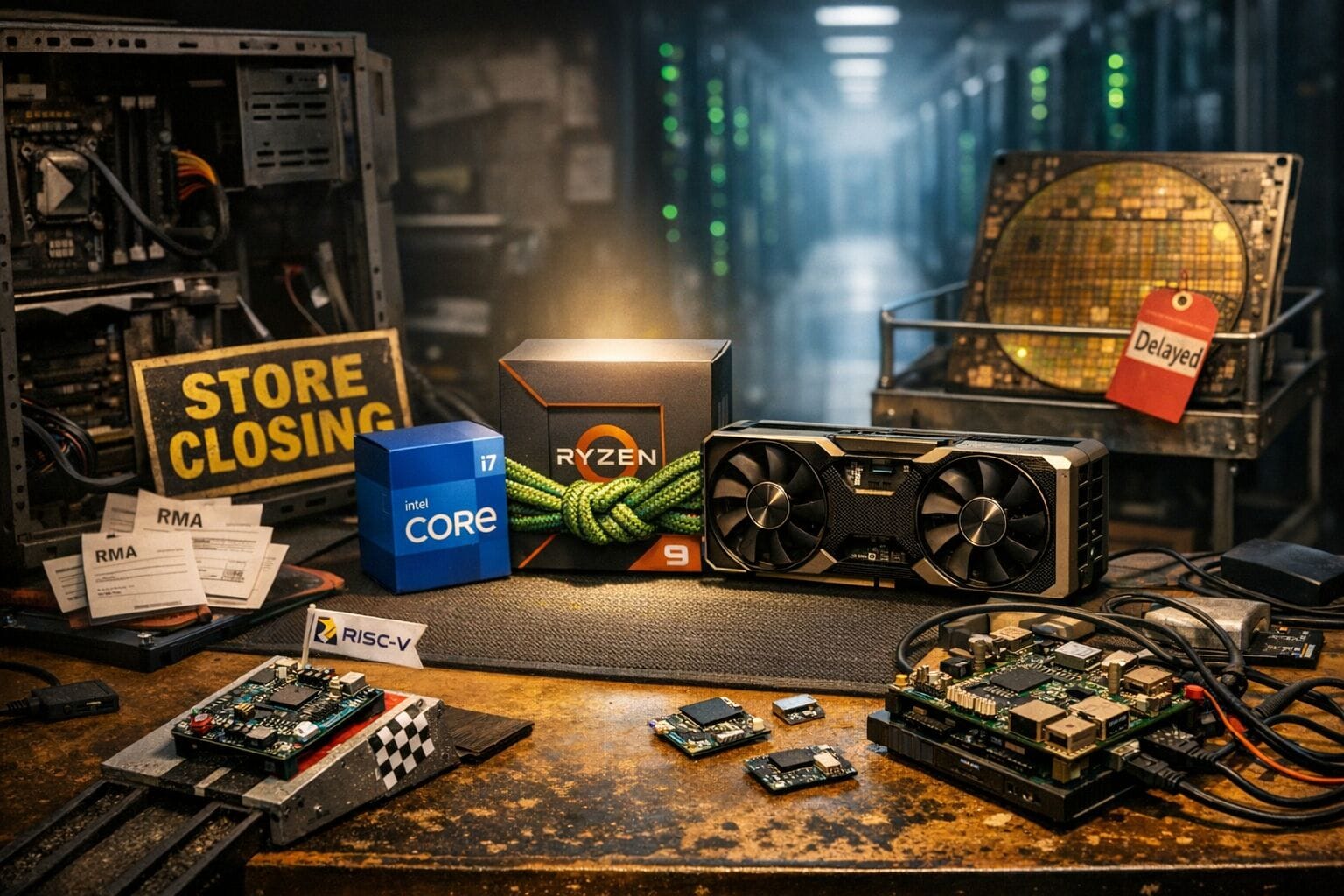
Well, AMD rocked on through most of 2025, Intel weirdly got into bed with NVIDIA, and the PC builder market seems to be imploding, so I’m going to chalk all of those as wins.
I was off about NVIDIA getting strong competition in the datacenter, though. That is a severe, strategic weak spot in everyone’s AI hardware investments where I was hoping someone would step in to fill the gap, but Cerebras and its peers haven’t really taken off yet.
My prediction for 2026 is that they won’t. For someone to be able to do that, NVIDIA needs to miss their growth targets first, so that’s my prediction for 2026.
I did get the continued fragmentation of the low-end market mostly right, and no, RISC-V still isn’t relevant, although there were enough RISC-V product launches that I’m now willing to wager that 2026 will be the year where we see a small, feisty development board or reference design that will outpace similar ARM-based devices.
Business
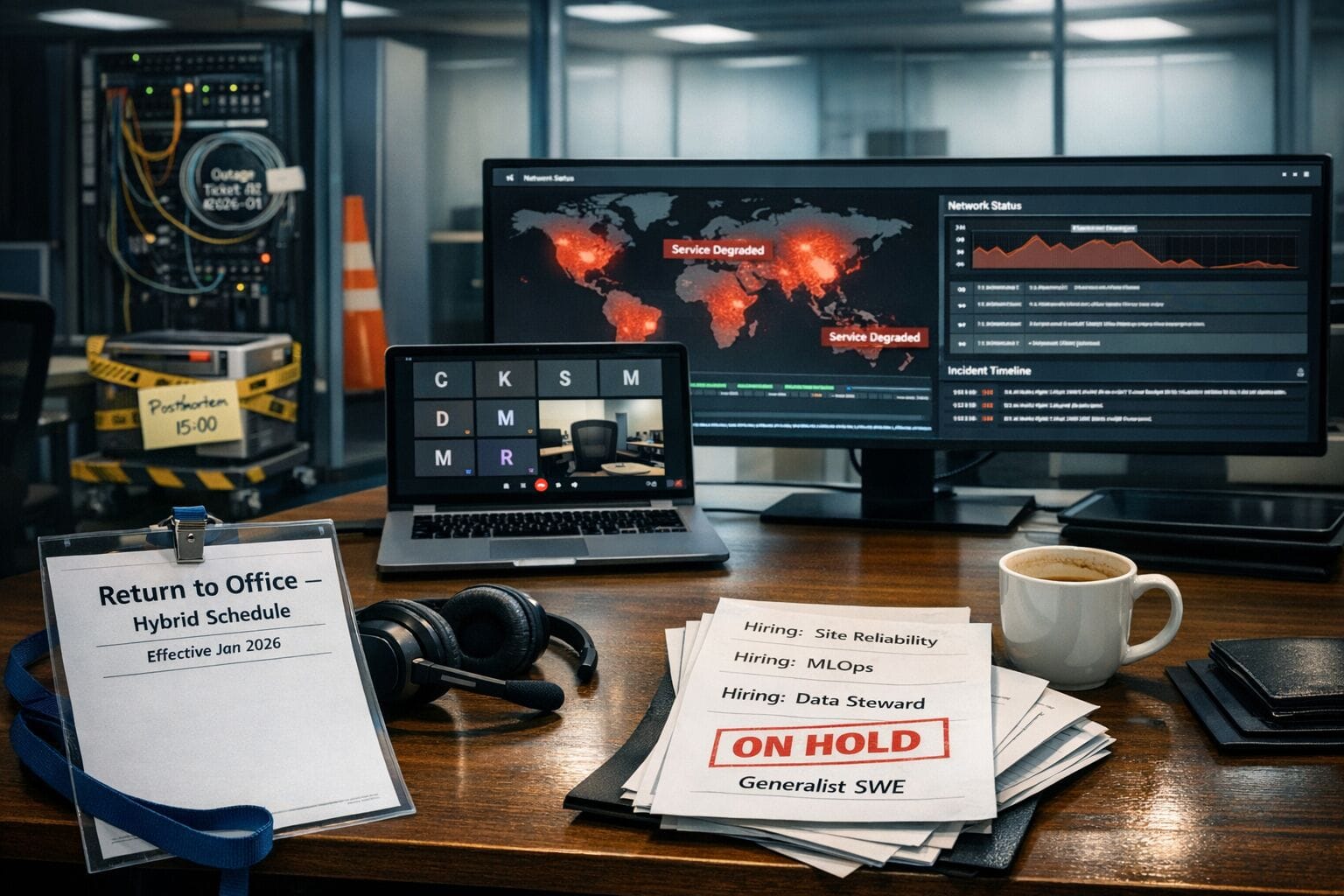
I was wrong about there being at least one major AI ethics scandal in the news (and no, the unfortunate killing of a cat by a Waymo doesn’t qualify).
But I do expect more news about serious AI mishaps in 2026, solely due to its extended adoption everywhere.
The telco market hasn’t bottomed out yet (so I missed that too). But I think I’m going to claim I was right about internet outages having become more common (I wasn’t factoring in AWS or Cloudflare when I wrote that, so I got lucky, I guess).
I do think outages will be more frequent in 2026, especially now that more services are relying on AI infrastructure. But I’m pretty sure that won’t be the only reason.
As to technology and jobs, well… The market is still a mess. I think I can say I was wrong to pin that on AI. I’m positive AI will just mean we need more people in IT and technology, just not in the current kinds of roles we have.
I did nail RTO, though. 2025 was a year where every month there were new dictates about moving back to (at least) a hybrid workplace culture, and my prediction is that that will be the default for 2026.
Even if, ironically, we will still sit on video calls at the office, and mostly alone at that.
The World
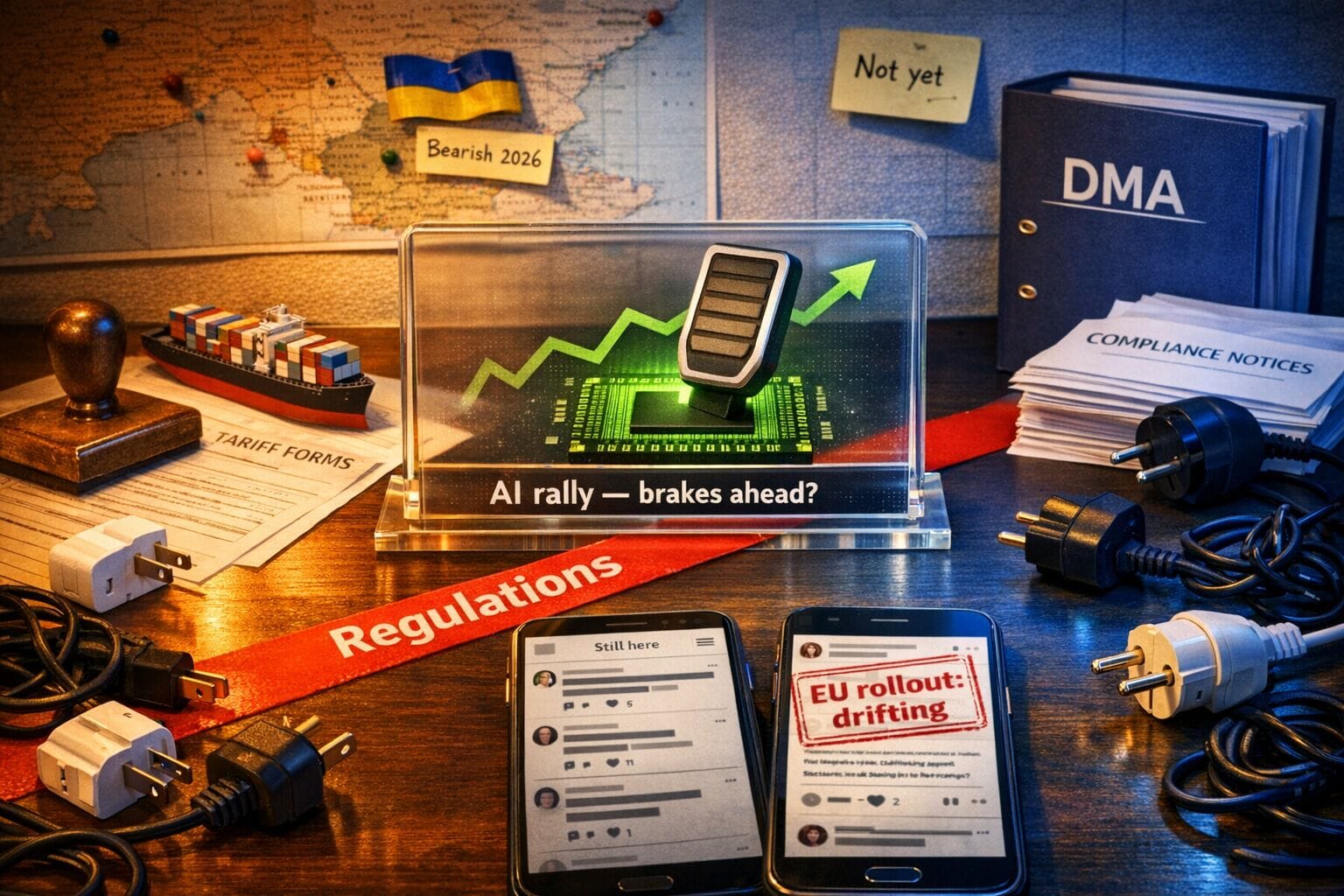
We all know how well the US tariff policy went, and in general how it’s going over there. So I will offer my sympathies as I claim blanket correctness on all counts (except for Taiwan, which hasn’t happened yet) and defer economic downturn to when NVIDIA makes the stock market hit the brakes.
I am bearish on 2026 where Ukraine is concerned, since the “at least” I used referring to that last year is, as far as I’m concerned, still pretty valid.
And although X surprisingly hasn’t imploded (wrong again, and I suspect it will keep stumbling along), I will stick to my guns and wager that Meta will keep dropping the ball on Threads in the EU.
In fact, I fully expect that, given the DMA and the passive-aggressive showdowns between Silicon Valley and the EU (including Apple’s malicious compliance), we will have much more friction regarding US-led digital services (and AI) in 2026.